

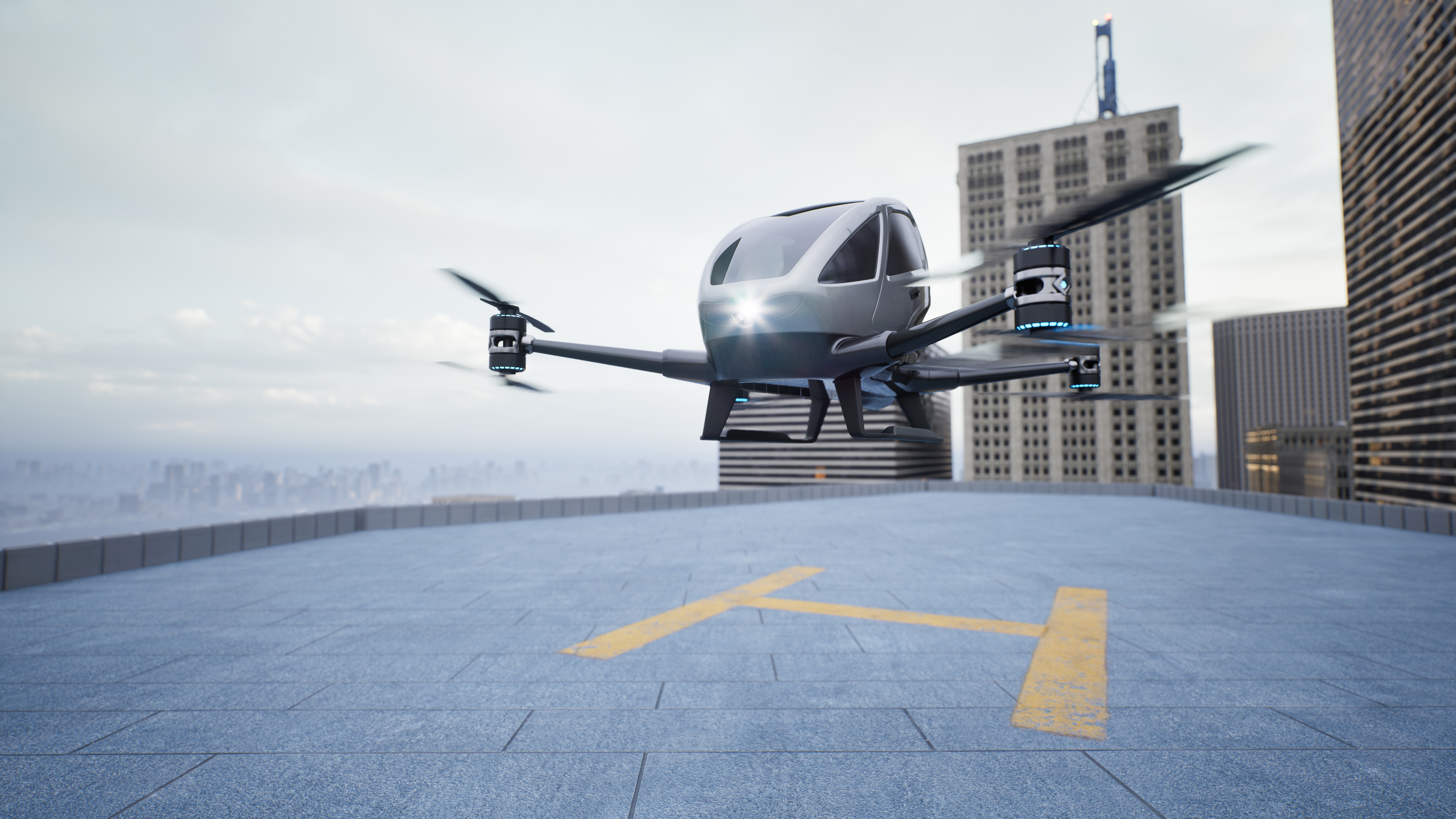
The Connectivity Challenges Shaping Advanced Air Mobility
Everyone is talking about what will make Advanced Air Mobility possible: electric propulsion, batteries, autonomy and new aircraft designs. But there is another technology quietly connecting it all.
As the Advanced Air Mobility (AAM) industry moves toward commercial flight, electric vertical takeoff and landing (eVTOL) aircraft are becoming increasingly complex. More electric power, more sensors, more data and more connected systems are being integrated into aircraft where space and weight are already at a premium.
That puts a new spotlight on a technology that rarely gets the attention it deserves: aerospace connectivity.
Connectors, cable assemblies and interconnect systems are the infrastructure behind the aircraft's electrical, RF, optical and data networks. For AAM manufacturers, choosing the right connectivity technology can have a direct impact on aircraft weight, reliability, integration and performance.
Powering the Electric Aircraft
Electrification is fundamental to AAM. Batteries, power distribution systems, inverters and electric propulsion systems all depend on reliable electrical connections.
But eVTOL aircraft cannot simply add more components to meet increasing power demands. Every connector, cable and interface adds weight and takes up valuable space.
This is driving demand for lightweight, compact and high-performance power connectors that can handle demanding electrical requirements without compromising aircraft efficiency. Radiall's aerospace connectivity solutions include technologies designed for electric propulsion, batteries, power distribution and power transformation.
The challenge is finding the right balance between power capability, size, weight and reliability.
More Data Means More Connectivity
The connected aircraft is also a data-intensive aircraft.
AAM platforms will rely on sensors, avionics, flight controls, communications and monitoring systems that continuously generate and exchange information. As aircraft become more autonomous and digitally connected, the ability to move that data reliably becomes increasingly important.
High-speed electrical and optical interconnects can support these growing data requirements while helping engineers manage the complexity of increasingly sophisticated aircraft architectures.
Radiall's QuickFusio™ hybrid connectivity platform, for example, combines electrical and optical channels in a compact solution, helping reduce wiring complexity while supporting high-speed data transmission.
When Every Gram and Millimeter Matters
AAM designers face a fundamental engineering challenge: how do you fit more capability into an aircraft without adding more weight?
Connector miniaturization and high-density designs can help but the goal is not simply to make a connector smaller. Interconnect solutions also need to simplify installation, support efficient aircraft assembly and make maintenance easier.
For an industry moving from prototypes toward scalable production, these factors can become just as important as electrical performance.
Reliability Starts With the Connection
AAM may represent a new chapter in aviation, but its interconnect systems still need to operate in demanding aerospace environments.
Vibration, temperature changes, moisture and other environmental stresses can all impact connectivity. At the same time, critical aircraft systems require dependable connections throughout their operational life.
That makes reliability a design consideration from the start.
Drawing on proven aerospace technologies can help AAM manufacturers address these challenges while adapting connectivity solutions to the unique requirements of electric and increasingly autonomous aircraft.
Building the Connected Future of Flight
The future of Advanced Air Mobility will not depend on a single breakthrough. It will depend on how effectively dozens of systems work together.
Electric propulsion needs reliable power connections. Autonomous systems need dependable data networks. Communications and navigation systems rely on high-performance RF connectivity. And all of these systems need to fit within strict size and weight constraints.
The aircraft may be the visible innovation, but connectivity is what brings the technology together.
With decades of aerospace experience across electrical, RF, optical and high-speed data connectivity, Radiall is helping engineers address the interconnect challenges shaping the next generation of flight.
Because when the aircraft of tomorrow takes off, every connection needs to perform.