

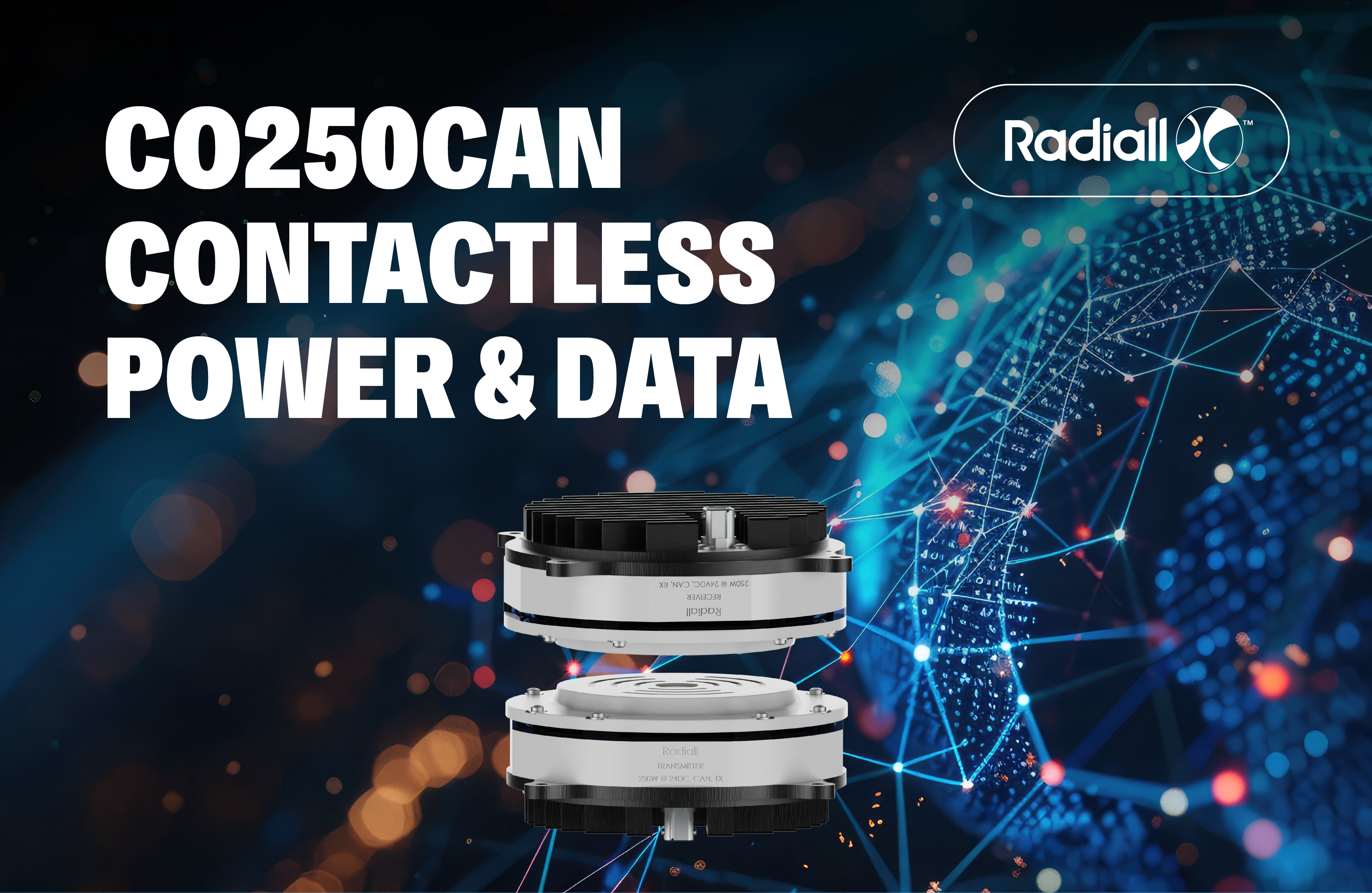
The Co250CAN Approach to Connector Lifecycle
Every physical connector has a number attached to it, whether anyone thinks about it or not. It's the rated mating cycle life, the point at which pins wear, contacts lose reliable continuity or seals stop doing their job. For most equipment that number sits comfortably out of reach. In applications with frequent mating and unmating cycles, such as eVTOL aircraft, drones, robotic systems and industrial equipment, connectors can experience significant wear much sooner than expected.
That's the part of the connector conversation that doesn't get talked about enough. Engineers spec for power rating, size, environmental sealing. Mating cycle life is often an afterthought until a program is deep into a service model and someone notices the connector interface is wearing out faster than the platform around it.
What Happens When a Connector Wears Out
Physical connectors rely on repeated contact. Every mate inflicts a small amount of mechanical wear on the pins, sockets and seals. Do that often enough and you start seeing intermittent connections, increased contact resistance or seal degradation that lets in moisture and dust. None of that shows up immediately. It shows up months later as an unexplained fault that turns out to be a connector nobody thought to inspect.
For platforms with a fixed service life and infrequent connector use, this is rarely a problem. For platforms built around modularity, like battery swap architectures for AAM or field-replaceable payloads on unmanned systems, it becomes a real design constraint. The connector interface can end up being the limiting factor on how many times a battery pack or module can realistically be swapped before something needs to be replaced or inspected.
No Contact, No Wear
Contactless power and data connectors remove the physical mating interface entirely. Power and data transfer through a non-conductive barrier using inductive coupling instead of direct pin contact. There's no wear mechanism from mating and unmating because there's no physical contact to wear down. Radiall's Co250CAN, part of the contactless connector range, is built around exactly this: unlimited mating cycles because the connection itself doesn't involve mechanical contact.
That has a few practical downstream effects worth walking through:
Sealing gets simpler. No cable penetration means no gasket or O-ring sitting at the interface, and one less thing to inspect or degrade over time. For systems operating in dust, moisture or vibration-heavy environments, that's a meaningful reduction in points of failure.
Field servicing gets faster and more forgiving. A technician swapping a battery pack in the field doesn't need to carefully align delicate pins under time pressure. A contactless interface tolerates a faster, less precise connect and disconnect, which matters when ground crews are working against a turnaround clock.
Maintenance planning changes. When mating cycle life isn't a constraint, inspection and replacement schedules can be driven by other factors instead of connector wear. That's a small thing on paper but it simplifies MRO planning over a platform's service life.
The Question That Saves You a Field Failure
Before specifying a connector for a system that will be mated and unmated often, it's worth asking a simple question: how many times will this connector actually be used over the platform's lifetime, and what happens when it gets there. For platforms built around modularity and frequent servicing, that number can arrive faster than expected, and it's a much easier problem to design around early than to solve after it shows up in the field.